
Every gated property eventually runs into the same budget question: who's actually watching the front gate? A staffed guard shack is the gold standard, but around-the-clock coverage is a real payroll line that most HOAs, apartment communities, and commercial lots can't justify. So the gate ends up on a keypad code that's been shared a hundred times, an old callbox that rings a phone nobody answers, or a gate that simply gets propped open because it's easier.
We install and service gate entry across St. Petersburg, Tampa, Bradenton, and Sarasota, and that gap between "a full-time guard" and "a code taped inside a mailbox" is exactly where CellGate's Watchman® — Your Virtual Security Guard — earns its name. It does the parts of a gate attendant's job that matter most: it answers visitors, lets you see who's there, checks credentials, and writes everything down.
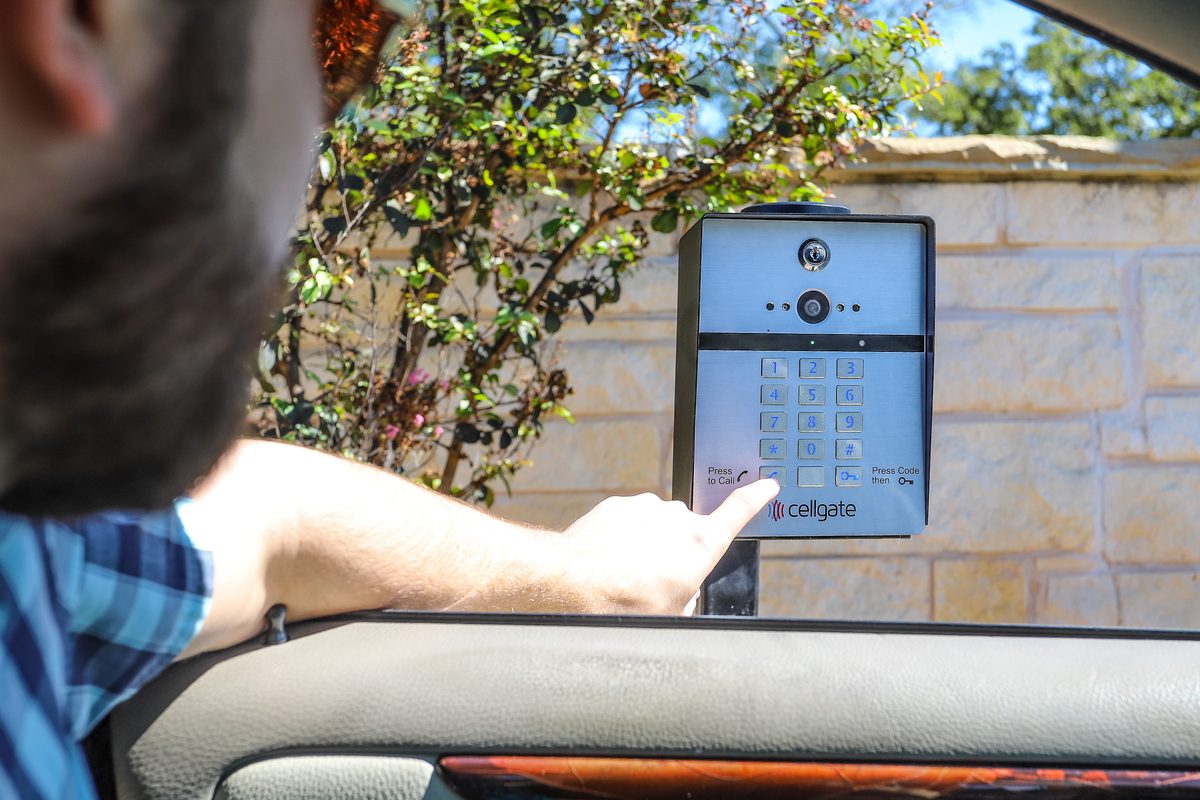
What a "virtual guard" actually does
Think about what a good gate attendant handles in a shift. Watchman covers the same ground, from a post at the entrance:
- Answers the visitor. A guest finds the resident or tenant in the directory and places a call. Watchman rings that person's cell phone or the CellGate app — wherever they are, not just a landline in the house.
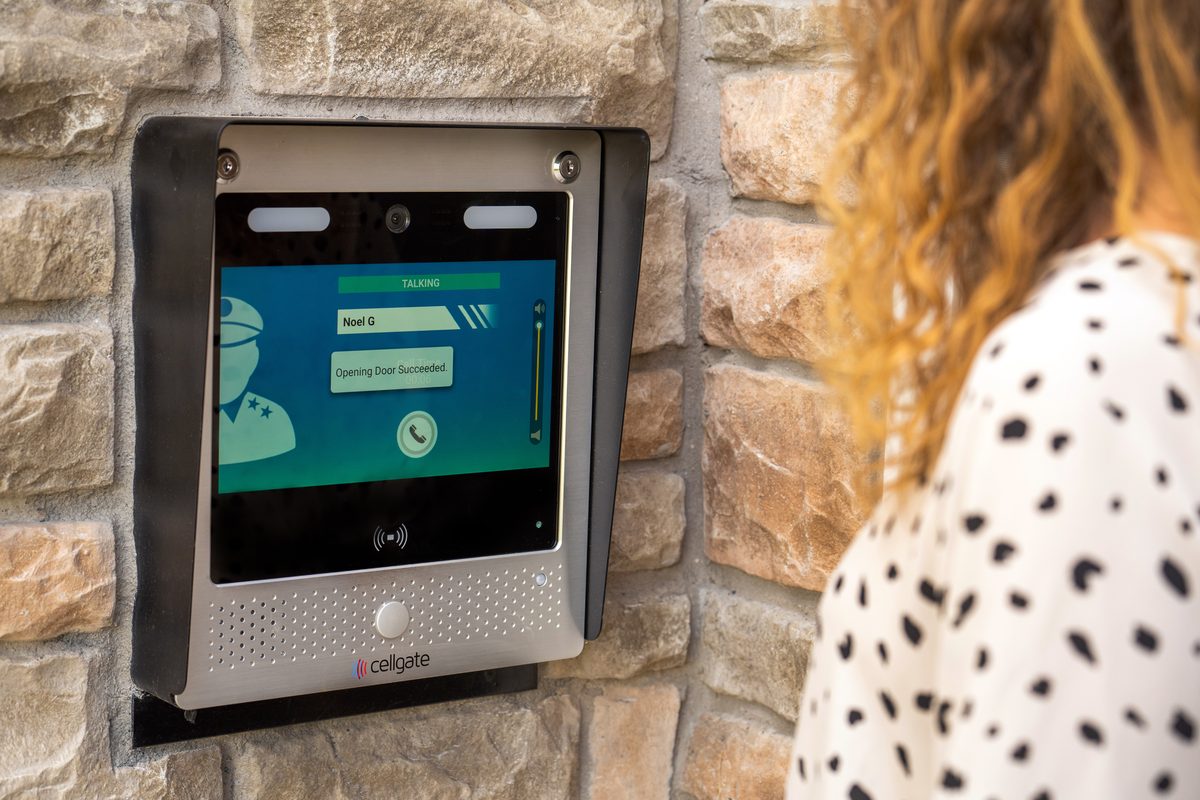
- Shows you who's there. Video-capable Watchman models let the resident see the visitor before they decide to open the gate.
- Checks credentials. Residents use a PIN, fob, or their phone. Guests can use a QR or PIN visitor pass issued ahead of time, so the gate works even when nobody's available to answer.
- Keeps the log. Every entry is recorded with a time stamp in the property's cloud account, so "who let that truck in?" has an answer.
And because it runs over its own cellular connection, it doesn't depend on a phone line at the gate — the reason so many old callboxes across Tampa Bay have quietly stopped working.
Matching the Watchman to the entrance
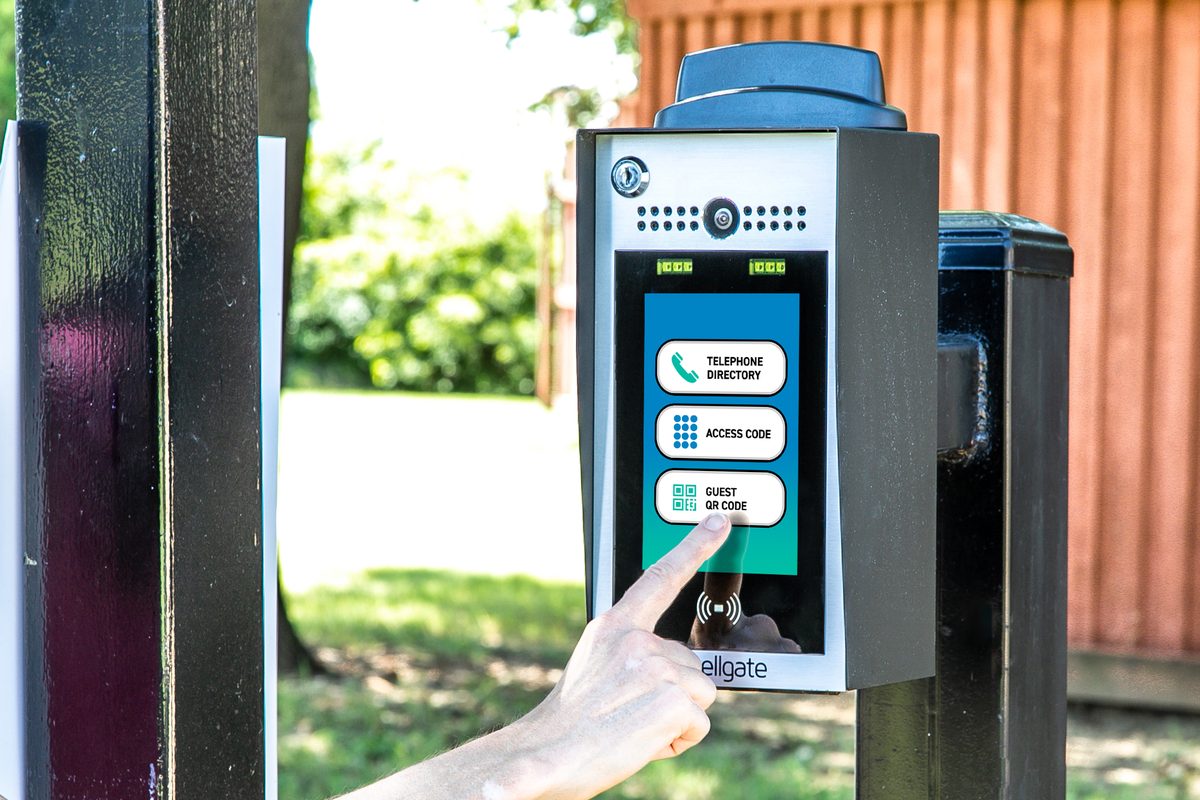
Watchman is a family of units, not a single box, and picking the right one comes down to how the gate is used:
- Single-family homes and small properties — a compact keypad unit like the W410 covers a private driveway or ranch gate cleanly.
- Small communities and commercial lots — touchscreen units like the W480 and W482 add an easy-to-read directory and on-screen visitor pass options.
- Apartment and HOA entrances — the larger touchscreen models, including the WXL, are built for high-traffic entrances with a big resident directory and video calling at the screen.
Adding eyes beyond the keypad
A real guard doesn't just watch the person at the window — they watch the lane. Pairing a Watchman with a CellGate external camera gives you a second view of the entrance, like the vehicle, the plate area, or whoever's tailgating behind the car that was let in. For HOAs dealing with gate-crash damage or commercial lots with after-hours dumping, that extra angle is often worth more than the entry unit itself.
Field Note
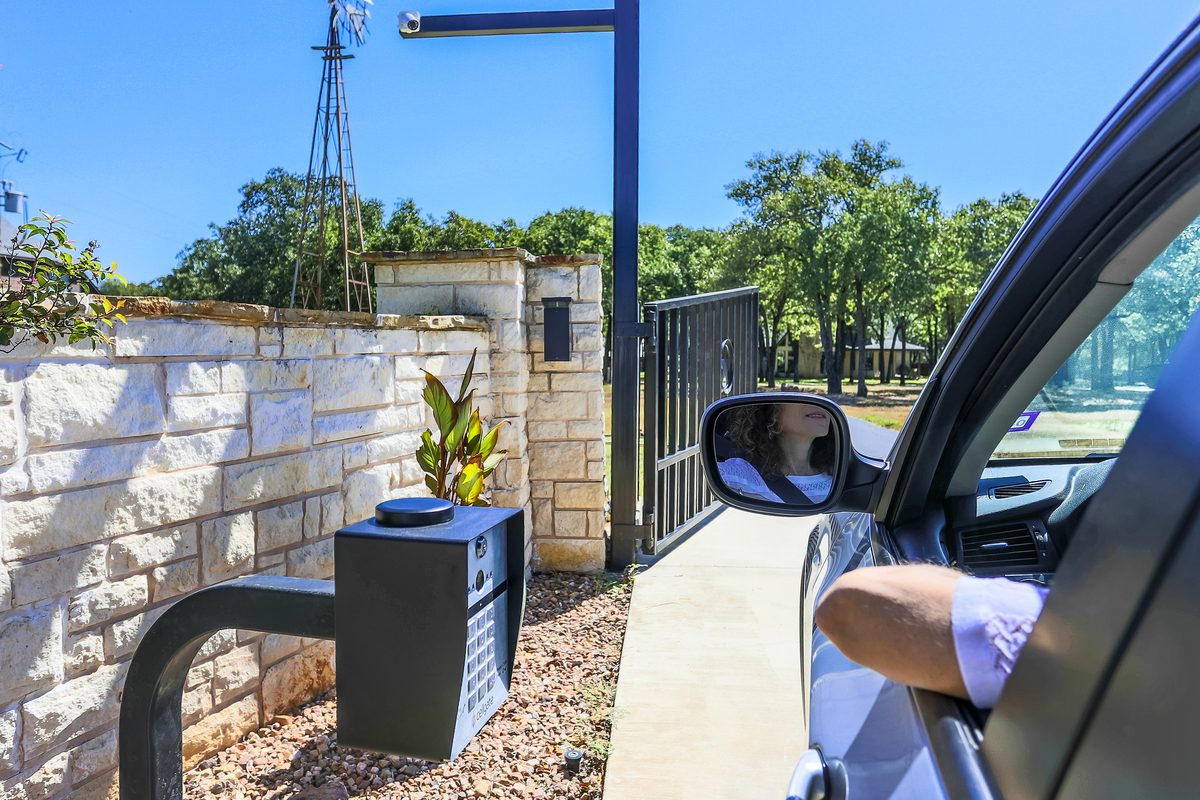
Before we quote a Watchman, we do two things at the actual gate: a cellular signal check and a look at how cars approach. Most Tampa Bay entrances have solid coverage, but heavy tree cover can call for an external antenna — and mounting height matters, so a driver in a pickup and a driver in a low sedan can both reach the screen without opening the door.
Part of one platform, not a standalone box
Watchman reports into the same TrueCloud Connect™ account as the rest of CellGate's lineup, which is what makes it more than a smarter callbox. The front gate Watchman, an OmniPoint® pool gate out back, and Entría™ controllers on the clubhouse doors can all share one resident list, one set of visitor passes, and one entry log. That's CellGate's Total Property Security Access promise — wireless when you need it, wired where you have it.
Watchman won't replace a guard who physically inspects vehicles, and we'll tell you that up front. But for the everyday work of answering visitors, checking codes, and keeping a record, it gives most properties guard-level control at the gate for a fraction of what staffing would cost. If your entrance is running on a shared code or a callbox that stopped ringing, let's take a look.
← Back to All Posts